Sound Insulation Testing

Professional sound insulation testing for Building
Regulations Part E compliance for new-build and
converted residential projects

JosTec provides professional sound insulation testing to support compliance with Part E of the Building Regulations on new-build and converted residential developments.

Whether you are delivering an apartment development, terraced or semi-detached housing, or a residential conversion, our team provides practical advice, efficient on-site testing and clear reporting to support Building Control sign-off and help keep your project moving.

Key Takeaways

  • Sound insulation testing assesses how effectively separating walls and floors reduce sound passing between adjoining dwellings.
  • Sound insulation testing is used to demonstrate compliance with Part E of the Building Regulations on residential properties with shared walls, floors or both.
  • Sound insulation testing is commonly required for flats, terraced and semi-detached housing, hotels, hostels, houses in multiple occupation, and conversion projects where new adjoining dwellings are created.
  • Airborne sound insulation testing is required for dwellings separated by walls or floors. Impact sound insulation testing is also required where dwellings are positioned above and below one another.
  • Testing is usually carried out as sample testing, with the number of tests depending on the number of dwellings and the wall or floor construction types used.

What is Sound Insulation Testing?

Sound insulation testing, also known as sound testing and pre-completion testing, is used to assess how effectively separating walls and floors reduce the passage of sound between adjoining dwellings.

Sound insulation tests are carried out to demonstrate compliance with Part E of the Building Regulations on residential developments with shared walls or floors. This commonly includes flats, semi-detached and terraced housing, and conversion projects where new adjoining dwellings are created.

Do I Need Sound Insulation Testing?

Sound insulation testing is required for all new build or newly converted residential properties with shared walls or floors. Under Building Regulations Approved Document E, you will need to undertake sound insulation testing if you are: 

  • Building a clock or blocks of flats 
  • Building a hotel, hostel or house of multiple occupancy
  • Building terraced or semi-detached housing
  • Converting a building whereby you create more residential dwellings that previously existed (e.g. converting a house or offices into multiple residential dwellings)

You do not need sound insulation testing for:

  • Detached dwellings
  • Refurbishment projects

Unsure if your project requires a sound insulation test? We’re here to discuss your project, the required regulations and your options.

Types of Sound Insulation Testing

The type of sound insulation testing required for a project will depend on how the dwellings are separated within the building.

Where dwellings are separated by walls or floors, airborne sound insulation testing will be required. Where dwellings are positioned above and below one another, impact sound insulation testing will also be required.

JosTec carries out both airborne and impact sound insulation testing and can advise on the testing scope required for your development based on the layout, separating elements and relevant Part E requirements.

Airborne Sound Insulation Testing

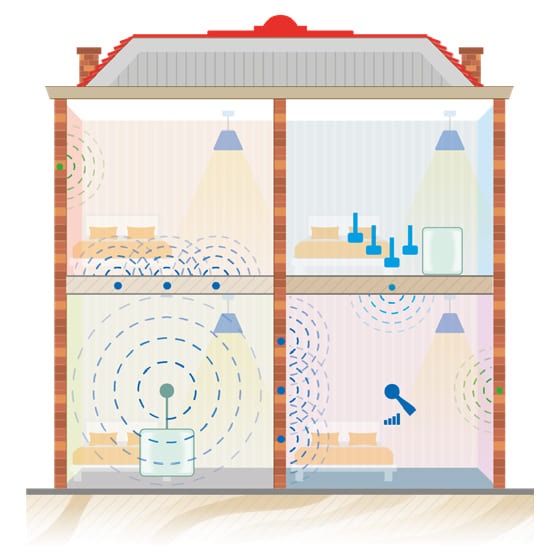
Airborne sound insulation testing measures how effectively a separating wall or floor reduces sounds transmitted through the air, such as speech, music or television noise, between adjoining spaces.

An Airborne sound insulation test is carried out on party walls and floors/ceilings between dwellings.

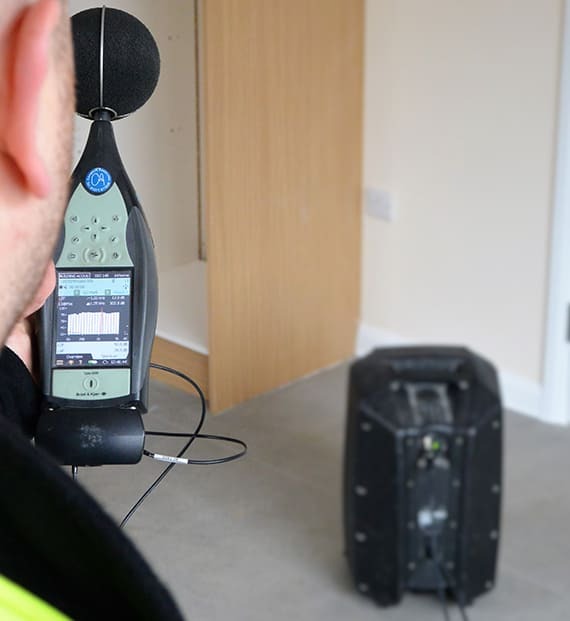
At JosTec, we conduct an airborne sound insulation test by placing a loudspeaker on one side of the partition (the source room) to generate controlled sound, then measure the sound level received on the other side of the partition (the receiving room) to assess how much the sound level is lost through the partition.

Impact Sound Insulation Testing

Impact sound insulation testing measures how effectively a separating floor reduces structure-borne noise, such as footsteps or movement across the floor above, into the dwelling below.

Impact sound insulation testing is carried out on separating floor/ceiling divides between dwellings.

At JosTec, we conduct an impact sound insulation test through the use of a tapping machine to generate impact noise on the floor above, then measure the sound level that passes through the partition to the room below to assess how effectively the floor construction reduces transmitted impact sound between dwellings.

When Should a Sound Insulation Test be Carried Out?

Sound insulation testing should be carried out as early as possible once the separating walls and floors are complete and the relevant units are substantially finished, as issues are usually easier and less costly to rectify earlier in the project. If testing is left too late, remedial works and retesting can delay completion.

Where possible, it’s recommended that testing is carried out before kitchens or bathrooms are installed.

Good site readiness is essential to a successful test visit. To help ensure testing can be carried out efficiently, we typically require the following as a minimum:

  • All doors, windows and seals fully fitted and closable
  • All electrical fittings fitted and working
  • 240V mains power must be available on-site in all rooms
  • Gaps in walls and floors are fully sealed
  • All walls and ceilings are plastered
  • No holes remaining in floors or ceilings
  • Access to all rooms on all relevant levels

What Does a Sound Insulation Test Involve?

Sound insulation testing is usually carried out as sample testing, meaning not every dwelling is tested individually. In most cases, one set of tests is required for up to 10 dwellings of the same construction type. The overall testing requirement will depend on both the number of dwellings and whether they are separated by shared walls only or by both walls and floors. Where a development includes different types of separating wall or floor construction, additional test sets may also be required to demonstrate compliance across each relevant construction type.

A sound insulation test involves assessing selected adjoining dwellings with an airborne and, where required, impact sound insulation tests. Equipped with cutting-edge technology, our sound insulation testing equipment and process allows us to review findings and generate the sound testing report on the very same day.

Why Choose JosTec for Your Sound Insulation Testing?

With over 15 years of experience in sound insulation testing, JosTec is an expert in sound insulation testing and consulting.

  • JosTec sound insulation test engineers are registered with SITMA
  • All of JosTec’s sound insulation tests adhere to ISO 140-4 and ISO 140-7 standards
  • Trusted by developers, building owners, construction companies, and local authorities
  • JosTec provides pre-test consults to help reduce the risk of failed sound insulation tests and costly remedial works

Frequently Asked Questions

What is a pre-completion sound test?

A pre-completion sound test, also known as a sound insulation test, is carried out before completion to demonstrate compliance with Part E of the Building Regulations. It assesses how effectively separating walls and floors reduce sound transmission between adjoining dwellings for residential purposes.

Sound insulation testing is commonly required for new-build flats, terraced and semi-detached housing, hotels, hostels, and conversion projects where new adjoining dwellings or rooms for residential purposes are created. Detached dwellings and straightforward refurbishment works will often fall outside this requirement, but project-specific requirements should always be checked. Discuss your project with a member of JosTec’s experienced team

Sound insulation testing is usually carried out as sample testing, so not every dwelling is tested individually. In most cases, one set of tests is required for up to 10 dwellings where the same wall and floor details are used. The total number of tests will also depend on how the dwellings are separated within the building, including whether they share walls only or both walls and floors. Where different separating wall or floor details are used, additional test sets may be required.

Sound insulation testing should be carried out as early as possible once the separating walls and floors are complete and the relevant units are substantially finished. Testing earlier in the programme is generally preferable, as any defects are usually easier and less costly to rectify before final completion pressure builds.

Before testing, the relevant units should be substantially complete and ready for assessment. As a minimum, doors, windows and seals should be fitted and closable, walls and ceilings plastered, gaps sealed, power available, and access provided to all required rooms.

If a sound insulation test fails, the likely cause will usually need to be investigated before remedial work and retesting can be arranged. Common causes include gaps in construction, poor junction detailing, unsealed penetrations or issues with the wall or floor build-up.

Airborne sound insulation testing applies to sound passing through separating walls and floors, such as speech, music or television noise. Impact sound insulation testing applies to structure-borne noise through separating floors, such as footsteps or movement from the dwelling above.

Yes. Once the testing has been completed and the results reviewed, JosTec issues a report to support compliance and Building Control sign-off.

JosTec typically have a lead time of around 1 week to be able to get to site, subject to the availability of our sound testing engineers and the project’s location. This can be sooner in some circumstances. Equipped with cutting-edge technology, our sound insulation testing equipment and process allows us to generate and deliver the sound testing report on the very same day.

We typically request detailed and scaled plans of the proposed development to ensure your quote is tailored to your sound testing needs. Additionally but not mandatory, written specifications detailing the fabric elements can assist us in defining the scope of work for the sound testing process.

Get Your Quote for Sound Insulation Testing

Get started with a free, no-obligation sound insulation testing quote.
Technical expertise and advice to support compliance with Part E of the Building Regulations, keeping your project moving


    We will get back to you within 1 working day
    Your details are kept 100% private

    Additional Services to Support Your Project

    Need help with more than Sound Insulation Testing?

    Explore our other services to help you navigate building regulations and achieve compliance.